Saturday, November 28, 2015

My Learning of & wonders of the world

 My Learning of
7 wonders of the........           world!!                                                   


Hello this is My first story of My learning

On Friday the 26 of November 2015   I went for the Google expo and I was  learning about the seven wonders of the world First what we did we got Google cardboard if you do not know what this is there is a 
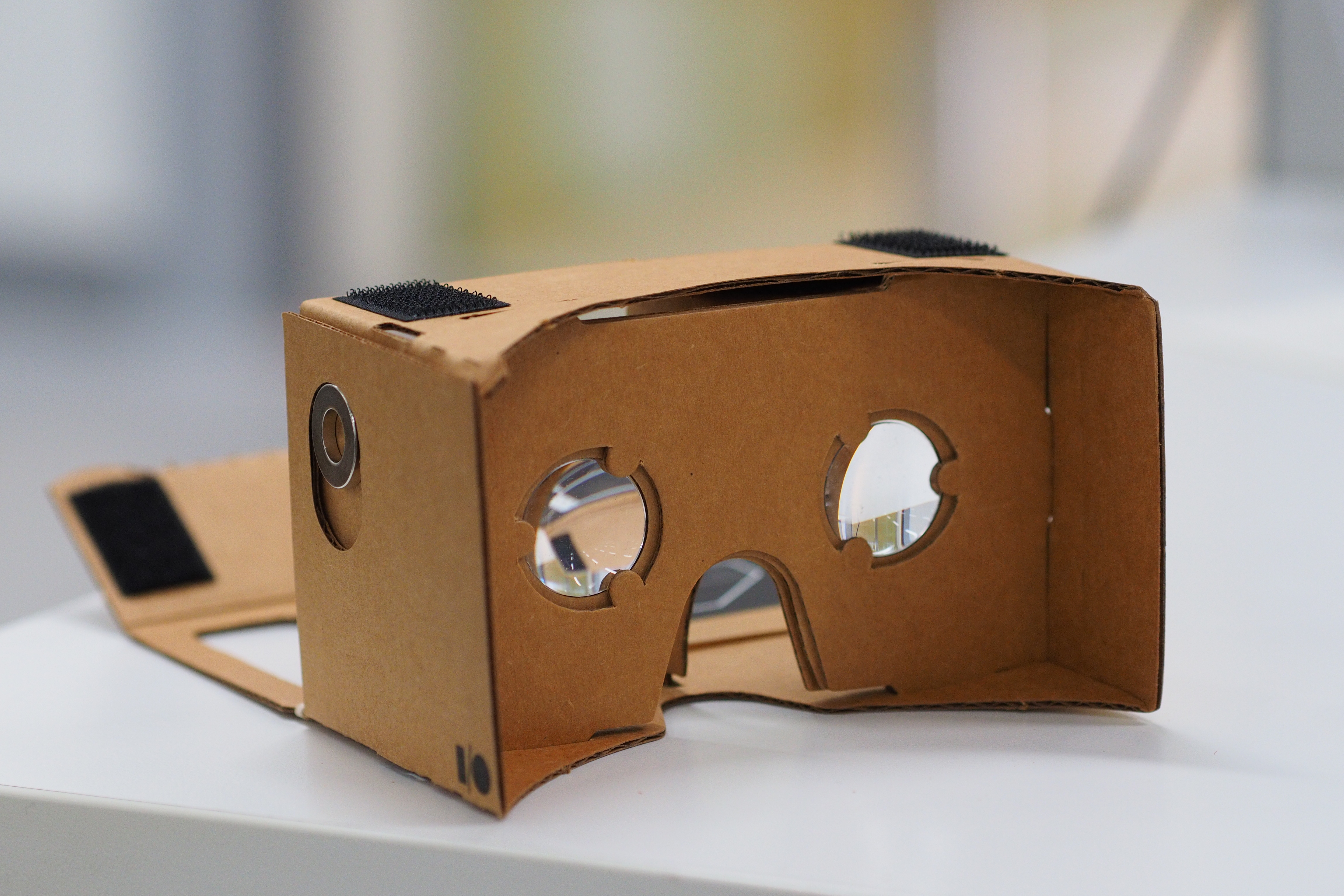
    picture down below 


The first thing we did we looked at the India we looked at the the Taj Mahal and looked at its pool and those stuff     


Then we looked at  the Great Wall of China It was made in the 5th century   


File:Great wall of china-mutianyu 1.jpg  


The next place we looked at Chechen  Itza in Mexico there are 2 temples 1 you can climb on and the Arthour 1 you can't


Then we saw Peru in MachuPicchu I saw Beautiful moat ins it was a beautiful place!!! It was made in the 15th century and it is in Peru.


at Rome at the Colosseum
 murders would be used as entrainment by fighting, weird ha, and the weirdest part was that if they flighted so good the would let them free!! 


 Then we looked at Brazil at the Christ Rerdeemer It is a big stauteur of Jesus it is taller than the sky did you know?


 We had a little bit more time so we went under water we looked at the beach and then we looked at the coral gardens and we looked at the submarine hrer is a piture of the coral gardens
File:Coral gardens underwater landcape scenic.jpg


And that is the end of my learning story and bye bye


Tuesday, November 24, 2015

Learning Decimals and Fractions


Learner: Norah    Learning Coach:  N.Denuwara         Date: Term 4
Learning Area: Mathematics
Learning Observed, Key Competencies/ Vision Principles
Norah has been learning about place values and decimal numbers in maths this term. To help her understand the value of a decimal number she is using the place values chart shown below. She has shown her capabilities at recognizing where each number goes on the place values chart by writing decimal numbers in the chart. She has also been participating and contributing in class discussions about place values. Norah has also made connections to her knowledge of number word forms to show her capabilities at writing values of decimal number.
Evidence of learning
Norah's maths work


Next Learning Steps
  • Write the fraction version of simple decimal numbers.

Sunday, October 25, 2015

Norah's Fractions Narrative Assessment


Learner: Norah                                                        Date: October 2015
Learning Area: Maths -Fractions                                        Learning Coach: John Dyer                 
Learning Observed
Norah is a great learner to have in a Curiousity task because she is a naturally ‘Curious’ learner. She is bursting to share her understanding and to ask questions about learning. We began a recent workshop learning about fractions and were using fraction walls to identify what effect the numerator and denominator has on the size of the fraction. Norah showed good understanding of this. We developed this by identifying equivalent fractions. Norah enjoyed investigating with the fraction tiles and explaining how she arrived at her answers.
  
Evidence of learning
Norah’s learning comes about through her willingness to listen, experiment and learn from her findings. She spoke confidently about her learning and evidenced her understanding in her ‘Capability’ follow up task.
Key Competencies/Vision Principles being demonstrated

Thinking - Making sense of information, experiences and ideas.
Using language, symbols, and texts - Making sense of words, numbers and images.
Managing self - knowing when to lead, when to follow and when to act independently.
Relating to others - Interacting effectively in a range of contexts.
Participating and contributing - Being actively involved in school and the community

Curious
Collaborative
Connected
Capable
Next Learning Steps
More of the same please Norah! Also spend some more time identifying equivalent fractions. We can see how decimals relate to what you have learned and when one is best used for a particular purpose. We will also see how you go about adding fractions that have different denominators.  


Tuesday, September 29, 2015


Learner: Norah,Alysia and Vivian      Learning Coach: Margaret Patrick            Date: 24.09..2015
Learning Area: Science Narrative Learning story
Learning Observed
These learners were part of the “Mythbuster” group for iExperience in Weeks 6-10.
They ”busted” the myths about everyday objects behaving in unusual ways.
They were curious and explored the  physical and chemical reactions that caused the strange things to happen.They practiced writing up the phenomenon using a scientific experimental method developing their capabilities.  In week 10 they collaborated to form a  group and they had to make their own experiment, connect with other research available and come up with a hypothesis as what they expected to happen, do the experiment and reflect on the actual outcome. Following this they were required to make a presentation to an audience of learners. This included: the actual experiment, explanation of any changes they made, review of their hypothesis, present their digital recording of their work and field answers to questions. They managed their time well and were ready to present. Their experiment was called “Sprite and Mint Mentos”. they were curious after watching a balloon become inflated due to the chemical reaction of soda and vinegar. They decided they wanted to make an experiment using a chemical reaction. After the first time they did their experiment they discovered that they needed a smaller neck on their bottle and the right effervescent lollies. Norah was instrumental in bringing the materials for their experiment.

Evidence of learning


Next Learning Steps
  • try out other experiments in a safe supervised manner
  • explore where this scientific phenomenon is used in real life activities
  • write a reflective blog post about your learning. Add a cross-section of comments from the other learners’ feedback during your presentation.
  • encourage your family to go online and read your blogs.
  • spend time ensuring all group members have a role during a presentation.
  • create a schedule for group members regarding responsibility for bringing various items to contribute to the group’s experiment.


Thursday, September 3, 2015

Norah's Operation Big Science Learning Story


Learners:  Kavisha, Norah, Alysia & Harry Li                              Learning Coach: DWilkes Learning Area: Science                                                                            Sept: August 2015
Learning Observed
Kavisha, Norah, Alysia & Harry Li had a blast conducting Operation Big Science in Week 7. Thanks to the New World kit of ingredients.  Lots of learning resources as well about the Types of Mixtures and Chemical Reactions in Baking.  The learners learned that cooking is scientific fun and that the science capabilities are for life.  After initially watching a short video explaining the difference between chemical and physical changes the learners were challenged to explore their curiosity by examining their materials and to discuss their priori knowledge about the materials and cooking with them.  They had tonic water, water and different kinds of jelly.  Then they collaboratively devised an experiment -, using the ingredients they selected.  First they identified a question and then a hypothesis- making connections to their prior knowledge.  As a group they needed to plan their method too.  During the cooking they made observations- noting what they notice, think and wonder.  Norah engaged fully in the process and supported the group through their experiment. She also developed some capability at measuring while completing their recipe.  Their concoction was a mystery- they wanted to see if it would glow in the black light. It didn’t so they left it to set and check the next day.  Such a collaboration!
Evidence of learning


23 Sep 2015 17:05:39.jpg


Next Learning Steps
  • complete their Operation Big Science experiment plan with observations and explanations
  • write a reflective blog post about the experience
  • use more specific measurements when writing a recipe
  • give detailed observations about what you noticed before, during and after tent on the LH1 blog post about Operation Big Science

Thursday, August 27, 2015

Norah's Poem Learning Story - August 2015


Learner:   Norah                                                                  Learning Coach: DWilkes
Learning Area:  Literacy                                                                              Date: Aug 2015
Learning Observed
This term all learners in years 5-6 LH1 wrote a speech on a topic of their choosing while the majority of the year 3-4 learners presented a poem.  Oral language is an important skill and Norah began to learn some language features to enhance selection and presentation of her selected poem.  She is growing her capabilities in presenting with confidence and used her voice to engage the audience. She had great eye contact indicating that she had memorized the poem.  She intonated really well with volume and was generally an emotive, varied and exciting presentation.  Norah worked with Mrs Dillner and some of the learners to practice reciting her poem ‘Pinkle Purr’ and acted on feedback received to improve her presentation.  Norah has quite a flare for the dramatic!
Evidence of learning
             Norah’s Poem Presentation:                          Oral Language Rubric Here
Screen Shot 2015-09-13 at 9.11.13 pm.png  Screen Shot 2015-09-13 at 6.11.47 pm.png
Key Competencies/Vision Principles
Norah demonstrated her curiosity by selecting a poem that she is interested and passionate about.  She connected with others in her delivery of the poem and grew her capability for speaking emotively and rhythmically. She worked collaboratively with others and provided feedback enthusiastically to her peers.  She related well to others and participated and contributed in all aspects of the process.
Next Learning Steps
  • practice reading out loud one page every day at day
  • write a poem and recite it out loud, then post it on my blog
  • add my oral language rubric to my Learning Pathway

Wednesday, August 5, 2015

Katherine, Norah, Alysia & Louisa's Rugby Learning Story


Learners: Louisa, Norah, Katherine & Alysia    
Learning Coach: T.Dillner           Date: 28.7.15
Learning Area: Physical Education - Rugby Skills
Learning Observed
Recently, the Year 3s have been learning about how to hold and pass a rugby ball. Katherine, Louisa, Norah and Alysia were in a small group working together. Firstly, they had time to practice holding the ball with their hands making a downward ‘L’ shape. Next, they had to try passing to each other. They aimed by facing the side of their bodies to the person they want to receive the ball, and passed by moving the ball in a line from hip to hip.
As a challenge, all of the groups had to count how many passes they could make without dropping the ball in a period of time. Louisa, Norah, Alysia & Katherine made over 70 passes! The most out of all the groups!
Evidence of learning


Key Competencies/Vision Principles
This task required a lot of collaboration, which all four girls were able to do. They communicated to each other by calling the name of the person who would receive the pass. They were also able to encourage each other by giving tips and reminders of how to be successful (Relating to Others).
Louisa, Alysia, Katherine and Norah all increased their capability when working with rugby balls. This was something new for all of them and they all had positive attitudes to ensure they would make progress in this area. They are now more confident and at ease with using a rugby ball (Managing Self).
Next Learning Steps
  • Remain positive in the face of difficulty, should it arise.
  • During break times choose to play with a rugby ball and do similar drills/activities as the ones we have be doing during learning time.
  • Use their new skills to teach or support other learners.


Wednesday, July 1, 2015

Norah's Mathematics Narrative Assessment


Learner:    Norah (mm)                                                 Date: June 2015
Learning Area: Maths - Strategy                             Learning Coach: John Dyer                 
Learning Observed
Norah has been working hard to develop her capability in Maths. In this photo she is working collaboratively to solve division problems. Norah is moving from using material to imaging objects in her mind. When faced with the problem of sharing 24 into 6 groups, she understands the idea of sharing as division and equally shares the correct number of counters.

Norah is now moving on to use her times tables knowledge to work out the number of groups in a set and is moving away from the need to use materials. She works well in groups and individually as asks for help when she is unsure of what to do next.
Evidence of learning

IMG_0266.JPG
Norah leads the way as she collaborates with Samantha and Gracy to solve a division problem.
Key Competencies/Vision Principles being demonstrated

Thinking - Making sense of information, experiences and ideas.
Using language, symbols, and texts - Making sense of words, numbers and images.
Managing self - knowing when to lead, when to follow and when to act independently.
Relating to others - Interacting effectively in a range of contexts.
Participating and contributing - Being actively involved in school and the community

Curious
Collaborative
Connected
Capable
Next Learning Steps
Continue to develop basic facts knowledge. This will include quick recall of addition and subtraction facts to 20 and recall of multiplication facts for the 2, 5, 10 x tables. In time, this will progress to the 3, 6, 9 x tables, the 4 and 8 x and finally 7 x tables.